The world of search engine optimization (SEO) is evolving rapidly, and artificial intelligence (AI) is at the center of this transformation. Traditional SEO strategies focused primarily on ranking web pages for specific keywords. However, with the rise of AI-powered search experiences such as Google’s AI Overviews, ChatGPT Search, Microsoft’s Copilot, and other generative AI tools, the way users discover information online is changing dramatically.
Today, search engines are no longer just providing a list of links. Instead, they are delivering direct, conversational answers by analyzing multiple sources and presenting summarized information to users. This shift is changing how businesses need to approach SEO if they want to remain visible and competitive online.
The Shift from Keywords to Intent
In the past, SEO success often depended on identifying high-volume keywords and optimizing pages around them. While keywords still matter, AI search places greater emphasis on understanding user intent.
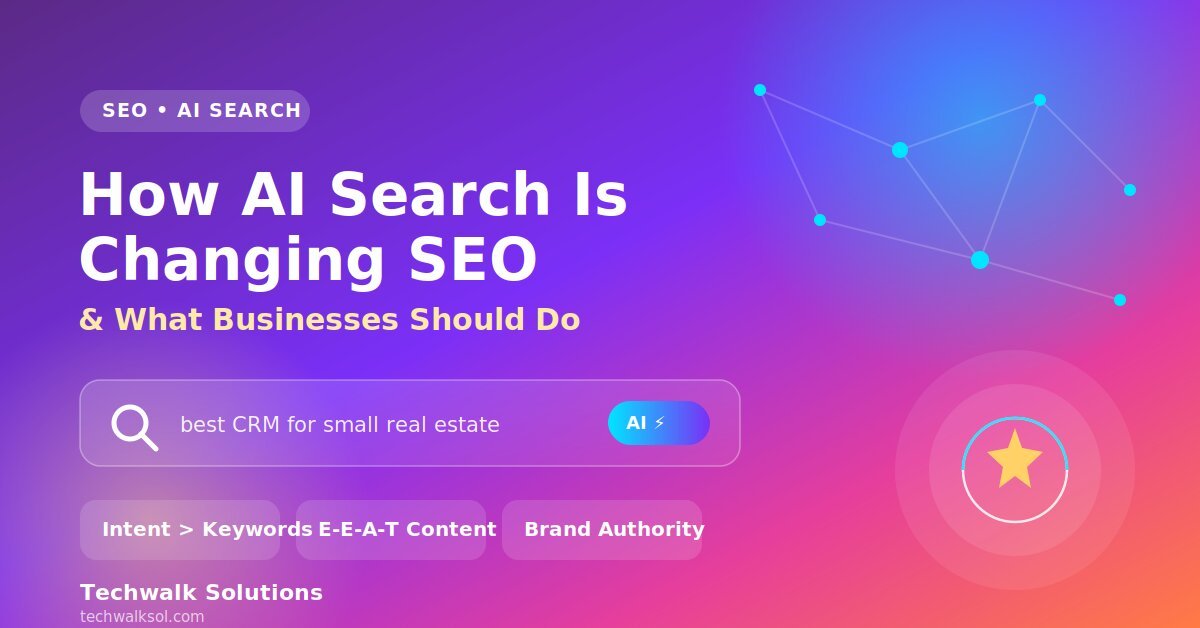
AI-powered search engines analyze the context behind a query rather than simply matching keywords. For example, when a user searches for “best CRM for a small real estate business,” AI tools evaluate the meaning behind the query and provide personalized recommendations based on relevance, authority, and user needs.
As a result, businesses must focus on creating content that genuinely answers questions, solves problems, and provides value rather than simply targeting keywords.
Content Quality Matters More Than Ever
AI search systems prioritize content that demonstrates expertise, experience, authority, and trustworthiness. Thin, generic, or AI-generated content with little value is less likely to be featured in AI-generated responses.
Businesses should invest in creating:
- Comprehensive guides and educational articles
- Industry-specific insights and case studies
- Frequently asked questions (FAQs)
- Expert opinions and thought leadership content
- Original research and data-driven content
The more useful and authoritative your content is, the higher the likelihood that AI-powered search platforms will reference it.
User Experience and Technical SEO Remain Critical
While content quality is essential, technical SEO remains a key ranking factor. AI search systems still rely on websites that are fast, mobile-friendly, secure, and easy to navigate.
Businesses should regularly audit their websites for:
- Page speed performance
- Mobile responsiveness
- Structured data implementation
- Crawlability and indexing issues
- Secure HTTPS protocols
A technically optimized website helps search engines understand and trust your content more effectively.
Building Brand Authority Is the New SEO Advantage
AI search often favors trusted brands and authoritative sources. Businesses that consistently publish valuable content, earn quality backlinks, gather positive reviews, and maintain an active online presence are more likely to be referenced in AI-generated search results.
This means SEO is no longer just about rankings it is about building credibility and becoming a recognized authority within your industry.
What Businesses Should Do Now
To succeed in the AI search era, businesses should:
- Create content focused on solving customer problems.
- Optimize for user intent rather than keyword stuffing.
- Improve website speed and technical SEO.
- Publish expert-led, trustworthy content regularly.
- Build a strong brand presence across digital channels.
- Use structured data to help search engines understand content.
- Monitor emerging AI search platforms and adapt strategies accordingly.
How Techwalk Solutions Can Help
Navigating the evolving world of AI-driven SEO requires expertise, strategy, and continuous adaptation. At Techwalk Solutions, we help businesses stay ahead of search trends through advanced SEO strategies, AI-search optimization, content marketing, technical SEO audits, website performance improvements, and digital growth consulting. Our team focuses on building long-term online visibility by creating authoritative content, improving user experience, and implementing data-driven SEO techniques that help businesses attract qualified traffic, generate more leads, and achieve sustainable growth in the age of AI-powered search.